
Double major in Forensic Science and Biology or Biochemistry
Double majoring can provide you with a deep knowledge in the natural sciences and specialized training in forensic science
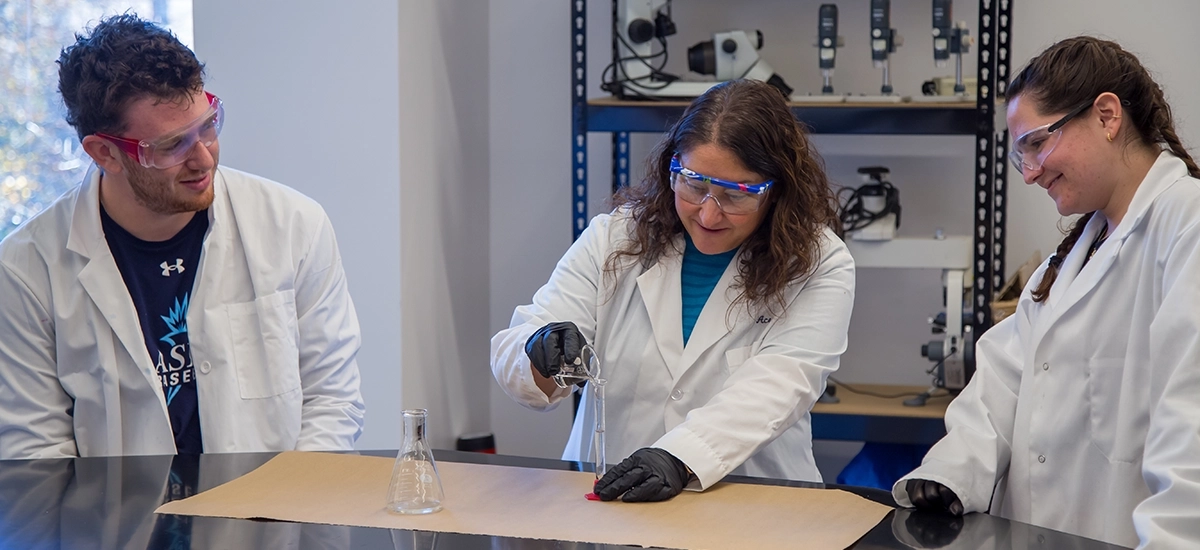
What is a double major?
Double majoring means completing two sets of major courses within a single degree like a BA or BS. You fulfil the core requirements of both majors within one undergraduate plan and earn one degree with both majors noted on your transcript.
What are the benefits of a double major in Biology/Forensic Science or Biochemistry/Forensic Science?
A double major in Biology and Forensic Science or Biochemistry and Forensic Science allows you to graduate with both a deep foundational knowledge in the natural sciences and specialized training in forensic science.
Students who complete a degree with a double major in Forensic Science and Biochemistry are particularly well-prepared for careers in forensic toxicology and analytical laboratories. Through advanced coursework in analytical chemistry, physical chemistry, and Calculus II, students develop the expertise required to analyze drugs, poisons, and trace chemical evidence. Students may pursue careers in crime laboratories, pharmaceutical settings, regulatory agencies, or continue onto graduate schools.
Students pursuing a double major in Forensic Science and Biology are well-positioned for careers that focus on biological evidence and human-centered forensic analysis. With a strong foundation in molecular biology, genetics, microbiology, and human physiology, students are ready to work with DNA evidence, biological fluids, and tissue analysis.
Who is this double major is especially valuable?
This double major is especially for students interested in forensic biology, serology, or medical and health-related careers, as it emphasizes biological evidence within both investigative and clinical contexts. Students also continue onto graduate programs in fields such as medicine, physician assistant studies, and biomedical research.
See the Forensic Science and Biology program pages for where our students are interning and alumni are working.
Additionally, Lasell’s program is one of only two FEPAC-accredited forensic science programs in New England.
Is there any downside to a double major?
Because the double major replaces elective flexibility with required coursework, students have less room to explore unrelated subject areas or add additional minors. Students follow a structured curriculum, particularly in the first year.
However, students who enter prepared for a challenging academic plan, especially those placing into Calculus I or bringing in transfer/AP credits, are well-positioned to complete the program smoothly.
Does it cost more or take more time to get a double major?
For most students pursing these double majors, there is no additional cost or time required to get two majors simultaneously. Some students do choose to do take one or more courses over the summer through Lasell.
Students with AP, dual enrollment, early college, or transfer credits, are generally able to complete all of their credits without extending graduation timelines or doing summer coursework.
What is the difference between pursuing a major with a minor and a double major?
A traditional major/minor combination includes one primary field of study supplemented by a smaller set of courses in a secondary area. Minors typically provide breadth but not the same depth or credentialing as a full major.
In contrast, students pursuing a double major complete the requirements of two different majors simultaneously. Students meet the requirements for both disciplines, resulting in a more comprehensive and in-depth academic experience. Strategic course planning makes completing both majors possible within a standard four-year timeline.
Student Profile - Double Major


Learn More about Lasell's Science Programs



Hailey Garrison, M.S.
Hailey Garrison is a science educator and researcher at Lasell University, where she serves as Assistant Professor of Biology, Program Chair for the Biology, Biochemistry, and KP Sciences, and Coordinator of the Virtual Reality Laboratory. She has taught a wide range of science courses at the university level, including appointments at Boston University, Harvard University, and Lasell University. Her passion for science education began during her undergraduate training in criminal justice technology and forensic science, when she volunteered at MIT to teach forensic science to local high school students. In graduate school, her research focused on the ethical and racial implications of forensic DNA phenotyping. Today, her research focuses on the design and study of immersive AR/VR and simulation learning environments for chemistry, biology, and forensic science, examining how these technologies influence scientific reasoning, engagement, and equity in STEM education. She is currently completing her doctorate in Curriculum & Instruction (Science Education) at Indiana University.